
A trust is a separate legal entity that can own assets. The trust relationship separates the ownership of assets into a legal owner (the trust) and a beneficial owner (the beneficiary). An appointed trustee manages trust assets.
Estate plans can use trusts to protect wealth, preserve privacy, minimize taxes, manage a business, or provide for the particular needs of family members. A Chicago estate planning attorney can help identify individual planning needs and determine whether a revocable or irrevocable trust is the appropriate tool to accomplish desired goals.
What is a Revocable Trust?
A revocable trust is a trust that can be modified or canceled by the person (grantor) who created it at any time during the grantor’s life. Once the grantor dies, the trust’s terms cannot be changed.
Typically, the grantor will also be the trustee and will have complete control and management of all trust assets. The grantor can usually add or remove assets from the trust without restriction. However, for the trust to be considered the owner of assets, the assets must be titled in the name of the trust.
When the grantor of a revocable trust dies, the trust property will be distributed to or held for the benefit of the beneficiaries named in the trust document. A successor trustee will take over the management responsibilities and carry out the trust’s terms.
What is an Irrevocable Trust?
After creating an irrevocable trust, the grantor cannot change the trust’s terms. The grantor has given ownership and control of the trust assets to the trust. A third-party trustee manages the assets for the benefit of the beneficiaries.
If you are wondering why in the world anyone would let go of assets while they are still alive, irrevocable trusts can protect generational wealth and provide benefits to family members that would not be possible without the trust.
An irrevocable trust is considered a ‘person’ for tax purposes and must pay the same taxes as any other living person would be required to do.

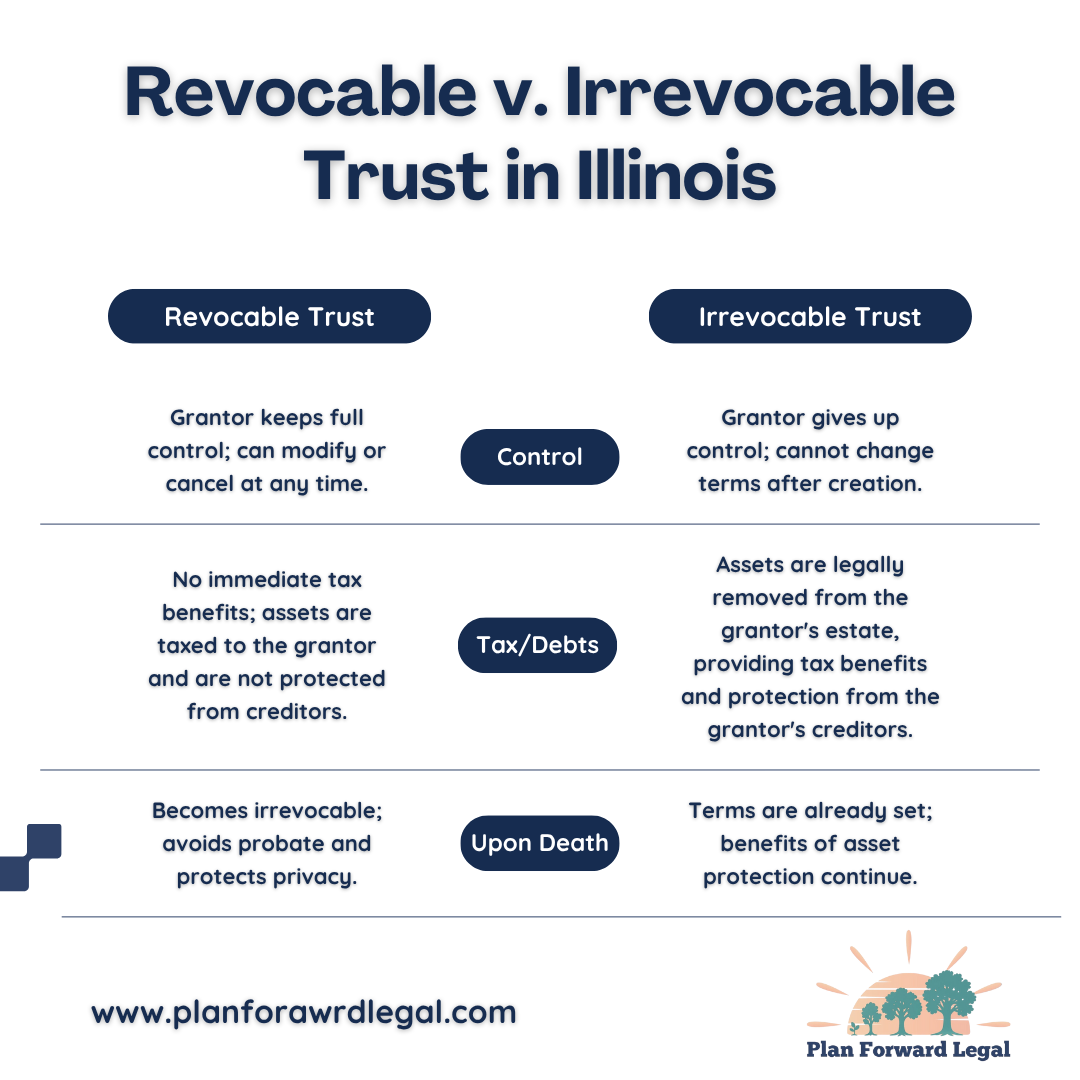
Grantor Control is the Main Difference between Revocable and Irrevocable Trusts
Grantor control over the trust assets is the primary difference between a revocable and an irrevocable trust. A revocable trust allows the grantor(s) to enjoy both legal and beneficial ownership of trust assets during their lifetime. If circumstances should change down the road, there is the flexibility to make more appropriate financial arrangements as necessary.
The grantor no longer owns the property transferred to an irrevocable trust, and the only control over the assets is the trust document. An irrevocable trust allows the grantor to direct the management of the property relinquished to the trust for the benefit of another person or entity.
A revocable trust is not a separate taxpayer because the grantor retains complete control over the trust property. Trust assets are taxed as if owned by the grantor. Creating an irrevocable trust legally removes trust assets from the grantor’s estate. The assets are not taxed to the grantor or available to satisfy the grantor’s debts.
How to Determine if a Trust is the Right Option for Your Estate Plan
An estate plan is really more of a life plan. It addresses circumstances and contingencies that exist now as well as events anticipated in the future.
Why Use a Revocable Trust?
A revocable trust does not legally separate legal and beneficial ownership during the grantors’ lifetimes because they can revoke the trust at any time. No immediate tax benefits are realized, and trust assets are not protected from creditor claims. Furthermore, the grantors must be diligent about titling property in the name of the trust.
Like a will, the terms of a revocable trust (also known as a revocable living trust) become irrevocable when the grantor dies. Unlike a will, a revocable trust operates as follows:
- Revocable trusts avoid probate and do not require court supervision for asset distribution.
- Revocable trusts protect privacy and do not become public records.
- Revocable trusts are harder for beneficiaries to challenge.
You can consult a Chicago revocable trusts attorney to learn whether a revocable trust is the right tool to accomplish your estate planning goals.
Why Use an Irrevocable Trust?
By creating an irrevocable trust, a grantor has legally parted with any ownership rights in the trust property. The grantor pays no tax on the property, nor is it subject to the claims of the grantor’s creditors.
Specialized types of irrevocable trusts provide certain benefits to the grantor or allow the grantor to provide specified benefits to another. The following are some common uses for irrevocable trusts:
- Irrevocable trusts can provide additional benefits without disqualifying a recipient from receiving government benefits. (Medicaid or special needs trusts)
- Irrevocable trusts can remove assets from a taxable estate while retaining benefits from the transferred assets. (life insurance, annuity, or charitable trusts)
Because irrevocable trusts can allow something akin to double-dipping, the trust language must be precise if the trust is to pass legal muster and accomplish its goals. It’s essential to have an irrevocable trust drafted by an experienced Chicago irrevocable trust attorney.
Plan Forward Legal Can Help You Select the Estate Plan that is Right for Now and Will Grow with You as Life Evolves
If you’re hesitant about establishing an estate plan because you think you have plenty of time or you don’t have enough assets to bother, you’re in good company. Only about 33% of Americans have done any kind of estate planning.
Many people don’t realize that an estate plan is about much more than just transferring assets at death. Estate planning allows people to manage their medical and financial affairs if they become incapacitated and to provide for the current needs of family members. At Plan Forward Legal, we make the process as easy as possible for our clients. Our goal is to give our clients peace of mind, knowing they have the tools in place to protect their interests and those of their loved ones during life and after death. Put your mind at ease. Get started with Plan Forward Legal today.


